
Categories
55+ Living, Downsizing Tips, Summerlin, Sun City SummerlinPublished August 13, 2026
Senior Accessible Housing Tax Credit Act: What Summerlin homeowners should know

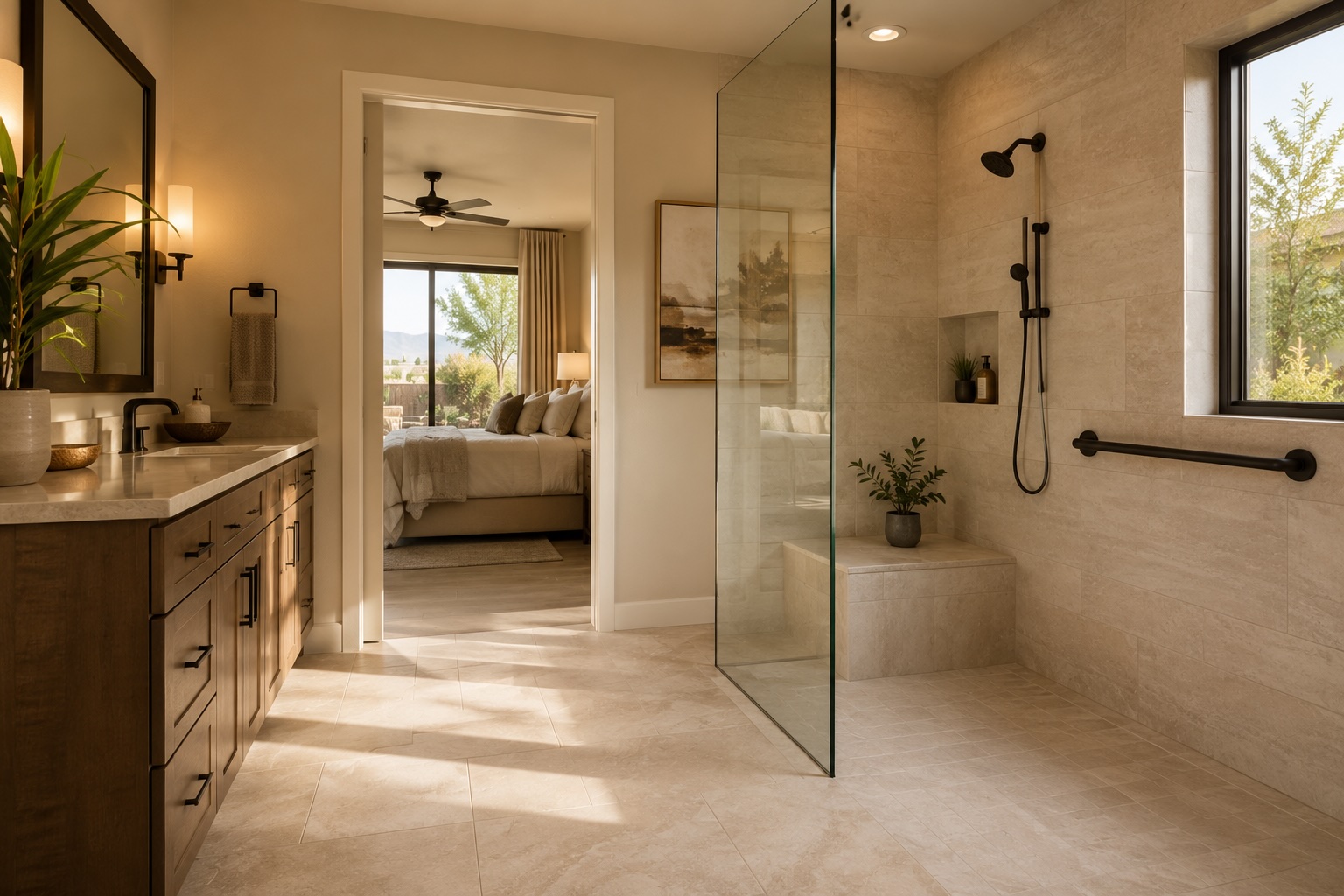
A few years ago I worked with a client who owned a single story home here in the valley. His mother moved in with him, and on paper the house was exactly right for her. No stairs, plenty of room, a layout that should have made the transition easy. But the bathroom she'd be using had a standard tub, and at her age and mobility level, that tub was not something she could safely use on her own. He ended up paying out of pocket to have it remodeled into something she could actually get in and out of.
That's the kind of expense people often don't think about when they're planning a move. The home is right. The layout works. But one room, one fixture, stands between "this house works for us" and "this house is dangerous for her."
This week I read about a bill in the Senate aimed directly at situations like his.
What is the Senior Accessible Housing Tax Credit Act of 2026?
On August 3, 2026, Senator Angela Alsobrooks of Maryland introduced S.5216, the Senior Accessible Housing Tax Credit Act of 2026, alongside co-sponsor Senator Kirsten Gillibrand of New York. It was read twice and referred to the Senate Finance Committee. Representative George Latimer of New York introduced the House companion, H.R. 9554, on June 30, 2026. The National Association of Realtors has announced its support for the legislation.
Under S.5216, an eligible taxpayer, meaning someone who has turned 60 by the end of the tax year, would receive a nonrefundable federal tax credit equal to the cost of qualifying accessibility expenses, up to $10,000 per year. For a married couple filing jointly, only one spouse needs to have reached 60. I pulled the actual bill text to check the details. If enacted as written, the credit would apply to taxable years beginning after December 31, 2026.
I want to be upfront about something before I go further, because I don't like giving clients half the picture. This is a proposed bill, not a law. It has been introduced and referred to committee. Congress would still need to pass it, and the president would need to sign it, before anyone could actually claim this credit.
Which home modifications would qualify?
The bill is specific about what counts. It lists wheelchair ramps, wider doorways, handrails and grab bars, non-slip flooring, bathtub cuts and shower seats, furniture risers, and chair lifts, which most people know as stair lifts. It also covers replacing toilets, bathroom vanities, and kitchen or bathroom faucets, along with the labor costs tied to installing any of it. A cosmetic kitchen remodel wouldn't qualify. This credit is built around safety and independence, not appearance.
One detail worth knowing: the bill also gives the Treasury Secretary, working with the Department of Health and Human Services, the authority to approve other modifications that help someone live safely and independently. Accessibility needs don't look the same in every house, and that provision leaves room for the list to grow.
A stair lift kept another client in the home he loved
I've seen this same issue play out in a different kind of house. Another client of mine had an office in the basement of his two story home in Summerlin. Stairs had become difficult for him, but he wasn't ready to give up the house or the office. He had a stair lift installed instead, a motorized chair that rides a track along the staircase so someone can travel between floors while seated.
He wasn't downsizing. He was staying, and the stair lift is what made staying possible.
What this means if you're weighing whether to move
I think about this bill in three situations I run into constantly with clients 55 and older.
The first is the client already living in the right home, like my client whose mother moved in with him. Single story, good bones, workable layout, but missing the one feature that makes it safe day to day. If this credit becomes law, it removes a real financial barrier to making that change instead of putting it off until an injury forces the issue.
The second is the client shopping right now for a single story home in Summerlin or Henderson. They find the layout and location they want, but the primary bathroom still has a standard tub or the hallway doorways are narrow. That doesn't automatically make the home wrong for them. It just means there's a cost to plan for, and right now that cost comes entirely out of pocket, the kind of expense I break down in the hidden costs of downsizing a Las Vegas home.
The third is the homeowner in a two story house who isn't ready to sell, the way my client with the stair lift wasn't ready. Getting older doesn't automatically mean a two story home has stopped working. The better question is usually narrower: what would actually need to change for you to feel comfortable staying? Sometimes the answer is a grab bar. Sometimes it's a bathroom modification. Sometimes, like my client, it's a stair lift that keeps one part of the house usable without touching the rest.
For some homeowners, modifying the house makes sense. For others, the better long-term choice may be moving to a single-story home in Summerlin after 55. Selling and moving are real options. Modifying the home you're already in is a second option, and it deserves the same serious consideration.
Does Medicare pay for aging-in-place modifications?
This is where I see the most confusion. Original Medicare Part B can cover certain durable medical equipment, things like walkers, wheelchairs, and hospital beds, when a doctor prescribes them and Medicare's requirements are met. But structural changes to a home, ramps, widened doorways, walk-in tubs, generally fall outside that coverage even when a doctor agrees they're medically necessary.
Medicare Advantage plans work differently. Some plans offer supplemental benefits beyond Original Medicare, including certain in-home support services. Coverage varies considerably by plan, so if you're considering a ramp, stair lift, or other home modification, check directly with your Medicare Advantage plan.
Are accessibility improvements deductible right now?
Under current IRS rules, some home modifications can qualify as deductible medical expenses, but only under specific conditions. The improvement generally has to be tied to a diagnosed medical need, and you have to itemize deductions. Only the portion of your total medical expenses that exceeds 7.5 percent of your adjusted gross income is deductible. If the modification increases your home's value, only the amount that exceeds that value increase generally counts as a medical expense. IRS Publication 502 walks through the details, and I'd talk to a tax professional before counting on this for your own return.
Why this is showing up in Congress now
The numbers explain why lawmakers are looking at this. The Census Bureau projects that by 2060, nearly one in four Americans will be 65 or older. The CDC reports that 43.9 percent of adults 65 and older currently live with some kind of disability. And Harvard's Joint Center for Housing Studies has found that less than 4 percent of U.S. homes have even basic accessibility features, a standard that includes something as simple as a no-step entrance. The population that needs accessible housing is growing fast, and the housing stock isn't catching up.
S.5216 isn't the only bill trying to close that gap. Senators Peter Welch of Vermont and Angus King of Maine introduced a separate measure, the Home Accessibility Tax Credit Act, which would offer a refundable credit worth 35 percent of eligible costs, capped at $10,000 a year and $30,000 over a lifetime. Two separate proposals show that home accessibility costs are receiving attention in Congress, although neither bill has passed.
Who would qualify, and how the income limits work
As proposed, the credit phases down for higher earners. The maximum $10,000 drops by a dollar for every two dollars your modified adjusted gross income exceeds the threshold: $200,000 for a joint return, $150,000 for head of household, or $100,000 for everyone else. A couple filing jointly with $205,000 in income, five thousand over the ceiling, would see their maximum credit cut by $2,500, leaving them eligible for up to $7,500 instead of the full amount.
The bottom line
This bill is not law, and I'm not going to tell a client to plan their finances around a tax credit that hasn't passed yet. But it's aimed at a real cost I watch clients absorb quietly because there's currently no other option, whether that's a bathroom remodel or a stair lift. If you're weighing whether to modify the home you're in or buy a single story home that needs some work to be truly livable long term, don't let this bill's uncertainty stall your decision. Just know the landscape might shift in your favor, and I'll keep you posted if it does.
Frequently Asked Questions
Is the Senior Accessible Housing Tax Credit Act already law?
No. S.5216 was introduced in the Senate on August 3, 2026, and referred to the Senate Finance Committee. The House companion, H.R. 9554, was introduced June 30, 2026. Neither has passed, and the credit is not available to claim on your taxes.
What home modifications would qualify under the proposed credit?
The bill specifically lists wheelchair ramps, wider doorways, handrails and grab bars, non-slip flooring, bathtub cuts or shower seats, furniture risers, chair lifts, and replacement toilets, vanities, and faucets, along with related labor costs. It also allows the Treasury Department, in consultation with HHS, to approve additional modifications. A cosmetic remodel would not qualify.
Would a stair lift qualify for the proposed tax credit?
Yes. The bill specifically lists chair lifts, commonly known as stair lifts, among the qualifying modifications.
Does Medicare cover stair lifts or other home modifications?
Generally not under Original Medicare, which covers certain durable medical equipment like walkers and wheelchairs but not structural home changes. Some Medicare Advantage plans offer supplemental benefits beyond Original Medicare, including certain in-home support services, but coverage varies considerably by plan. Check directly with your specific plan.
Are there any tax benefits available right now for home accessibility upgrades?
Under current IRS rules, some home modifications tied to a diagnosed medical need may qualify as deductible medical expenses if you itemize. Only expenses exceeding 7.5 percent of your adjusted gross income are deductible, and if the modification increases your home's value, only the amount above that increase generally counts. See IRS Publication 502, and talk to a tax professional about your situation.
Who would be eligible for the $10,000 credit if it passes?
As proposed, an eligible taxpayer would need to turn 60 by the end of the taxable year. For a married couple filing jointly, only one spouse would need to meet the age requirement. The credit phases down for higher incomes starting at $150,000 for head of household, $200,000 for joint filers, and $100,000 for other filing statuses.
Do I need to sell my two story Summerlin home if the stairs are becoming difficult?
Not necessarily. Selling is one option, but a stair lift, added handrails, or reorganizing how you use certain rooms might solve the actual problem without a move. The real question is what specifically isn't working anymore, and whether a reasonable modification would fix it.
Scott Rotheiser, Nevada Real Estate Broker, License #B.1003211, specializes in 55+ communities, downsizing, single-story homes, and active adult living in Summerlin, Henderson, and the greater Las Vegas area.
Since 2011, Scott has been involved in the sale of more than 1,500 homes across the Las Vegas area, spanning a wide range of buyers, sellers, and property types. Today, his work focuses on 55+ housing, active adult communities, downsizing, new construction considerations, and helping clients understand how housing decisions fit into long-term lifestyle planning.
Visit scottrotheiser.com to learn more.
Sources
- S.5216, Senior Accessible Housing Tax Credit Act of 2026, full bill text, GovInfo
- H.R.9554, Senior Accessible Housing Tax Credit Act of 2026, Congress.gov
- Alsobrooks, Gillibrand Introduce New Tax Credit for Seniors, Senator Alsobrooks press release
- King, Welch Introduce Legislation to Prevent Costly Falls, Senator King press release
- IRS Publication 502, Medical and Dental Expenses
- Medicare Coverage of Durable Medical Equipment & Other Devices, Medicare.gov
- Medicare Advantage: Plans Generally Offered Some Supplemental Benefits, but CMS Has Limited Data on Utilization, U.S. GAO
- CDC Data Shows Over 70 Million U.S. Adults Reported Having a Disability, CDC
- The U.S. Joins Other Countries With Large Aging Populations, U.S. Census Bureau
- Does the House Fit? Residents' Experiences of Home Accessibility, Harvard Joint Center for Housing Studies
This article summarizes publicly reported information for general educational purposes and is not legal or tax advice.

Scott Rotheiser
| H Scott Rotheiser
or another way